Subscribe to our mailing list and get the latest CITRIS news, research updates and event announcements delivered straight to your inbox.
Big Ideas a topic at Convergence Science forum
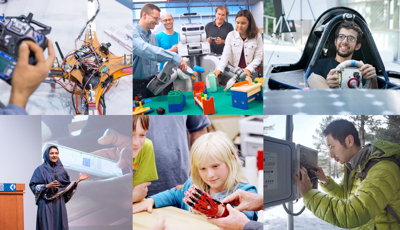
The Big Ideas contest was one of several topics at a recent forum

CITRIS and the Banatao Institute
Creating information technology solutions for society's most pressing challenges
Subscribe to our mailing list and get the latest CITRIS news, research updates and event announcements delivered straight to your inbox.
The Big Ideas contest was one of several topics at a recent forum
The Berkeley Center for New Media student fellowship deadline in February
2010 CITRIS Holiday Gala
CITRIS is now hiring for the position of Managing Director i4Energy Center (MD/i4E)
CITRIS-funded research on sensors placed on the Golden Gate Bridge has been mentioned in technology quarterly pages of The Economist this week
This newsletter covers CITRIS’s emerging energy-efficiency testbed community
Come join us as students present their project ideas leveraging novel information and communication technologies to support social causes worldwide, while competing for $10,000 in prizes. Winners will be chosen by a distinguished panel of judges to receive seed funding to further advance their ideas.
In this talk, Gene Wang and David Moss will discuss the Energy Internet ofThings and describe how Brains in the Cloud can connect with billions of sensor-based nerves and muscles in the physical world to go places the Internet never dreamed of.
One of the key challenges to enabling an autonomous underwater vehicle (AUV) to explore an unknown environment is the ability to navigate. In the past, navigation was typically done using either an acoustic array or by dead-reckoning based on inertial instruments.
In recent years, the technocratic urban planning establishment has begun to recognize that small-scale, creative, temporary, tactical urban interventions are a powerful instrument for spatial research and experimentation. New collaborative strategies between artists, designers and city agencies have emerged, resulting in urban spaces that are iterative, modular, flexible and designed, in part and over time, by the people who use them.