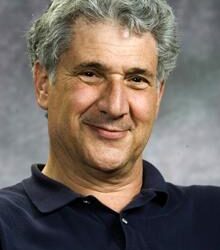
Professor, Civil and Environmental Engineering
UC Berkeley
Engineering, Environmental Systems Analysis, Industrial Ecology

CITRIS and the Banatao Institute
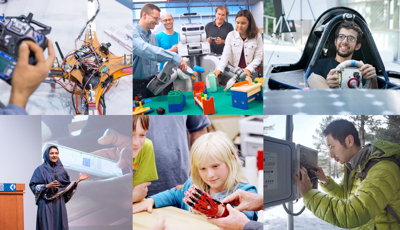
Creating information technology solutions for society's most pressing challenges
The headquarters of CITRIS and the Banatao Institute are located in Sutardja Dai Hall (SDH) on the UC Berkeley campus. Specially designed to house this interdisciplinary research institute, the building contains 141,000 sq. feet of laboratory space for collaborative research, faculty offices, the 149-seat Banatao Auditorium, conference rooms on each floor, and modern classrooms. SDH also hosts the CITRIS Invention Lab, a rapid prototyping space used by UC entrepreneurs in our CITRIS Foundry startup accelerator program and the student maker community. The Marvell Nanofabrication Laboratory occupies a two-story, 15,000-square-foot wing of Sutardja Dai Hall where academic and industry researchers develop prototypes for new biosensors, photonics devices, and other MEMS/NEMS sensors. SDH is equipped with hundreds of sensors and sophisticated systems for building management that form a living laboratory on campus for energy research and proof-of-concept demonstrations.
Professor, Civil and Environmental Engineering
UC Berkeley
Engineering, Environmental Systems Analysis, Industrial Ecology
Roy W. Carlson Distinguished Professorship in Engineering
UC Berkeley
Engineering, Construction Systems, Adaptive Project Leadership, Building Information Modeling Bim, Civil Infrastructure Systems, Construction Process Engineering, Design Management, Engineering Project Management, Integrated Project Delivery Ipd, Lean Construction, Lean Production, Life-cycle Engineering, Megaproject Delivery, Supply-chain Management, Sustainability, Virtual Design And Construction Vdc
Professor Emeritus, Electrical Engineering and Computer Sciences (EECS)
UC Berkeley
Engineering, Computer Architecture, Cloud Computing, Hardware, Risc
An SF Chronicle article details the efforts of three UC Berkeley engineering students who have been recognized by campus
officials for their efforts to help people in impoverished areas of India, Sri
Lanka and Mexico secure clean drinking water and save lives by reducing a
potentially devastating threat to public health.
Two agricultural proposals’one on supporting
urban agriculture in Mexico City and the other on alleviating water scarcity in
California farming’are co-winners of the first annual CITRIS White Paper
competition and will receive $7500 each.
Professor Emeritus, Political Science
UC Berkeley
Letters And Science, Political Economy, Business And Policy Interactions, Entrepreneurial Finance, Global Economy, Industrial Policy, Platform Economy, Technology And Society, Trade Policy
Professor, Industrial Engineering and Operations Research
UC Berkeley
Engineering, Stochastic Systems, Applied Probability, Queueing
Professor Emeritus, School of Information
UC Berkeley
Information, Innovation Regions, Economic Geography, Regional Economic Development, Silicon Valley, Tech Clusters, Technology And Policy
Work by CITRIS researcher Steve Glaser is helping to preserve Masada, a World Heritage Site in Israel. In mid-August, Glaser will set up seismic monitoring stations at the visitors
center at the base of the mountain and at the watchtower on top.
Nortel Distinguished Professor of Electrical Engineering and Computer Sciences
UC Berkeley
Engineering, Nanoeletronics, Micro/nano Electro Mechanical Systems (mems), Nanophotonics, Optical Mems, Optoelectronics, Optofluidics, Physical Electronics (phy), Silicon Photonics
Tele-immersive Environments for EVErybody, or TEEVE, is being
tested simultaneously across thousands of miles this spring in labs at UC Berkeley and the University of Illinois.
Professor, Electrical Engineering and Computer Sciences (EECS)
UC Berkeley
Engineering, Nanotechnology, Electronic Materials, Energy Devices, Microelectromechanical Systems (mems), Microfabrication, Nanoelectromechanical Systems (nems), Nanomaterials, Nanotechnology, Physical Electronics, Power And Energy
Professor, Electrical Engineering and Computer Sciences (EECS)
UC Berkeley
Engineering, Computer Systems And Architecture, Computer Systems; Machine Learning Systems; Hardware/software Co-design
Professor, Electrical Engineering and Computer Sciences (EECS)
UC Berkeley
Engineering, Control And Autonomy, Biological Networks, Cell Signaling, Control Theory, Embedded Systems, Hybrid Systems, Intelligent Systems, Robotics, Systems Biology
Professor, Mechanical Engineering and Bioengineering
UC Berkeley
Engineering, Biofluid Mechanics, Biomems, Experimental Fluids, Hemodynamics, Microfluidics
On April 20, five new R&D centers opened in Hong Kong to further
promote the development of innovation and technology. Hosted by
local universities and technology support organisations, including CITRIS, the Centers
provide a one-stop service for applied research, technology transfer and
commercialisation and help facilitate industries to move up the value chain.
More>>
Research by CITRIS researchers and corporate partners is helping bring
high tech to the developing world at a price that's right.
Professor Emeritus of Architecture, Founder of Center for the Built Environment
UC Berkeley
Environmental Design, Indoor Environmental Quality, Building Systems, Climate Control, Human Comfort, Hvac
Associate Professor
UC Berkeley
Professor, Director, Berkeley Initiative in Soft Computing (BISC)
UC Berkeley
Professor, Industrial Engineering and Operations Research
UC Berkeley
Engineering, Simulation Modeling, Experimental Design, Modeling Foundations, Response Optimization, Simulation Experiments, Simulation Modeling, System Optimization
Professor Emeritus, Industrial Engineering and Operations Research
UC Berkeley
Engineering, Supply Chain / Logistics, Decision Sciences, Logistics, Optimization, Supply Chain
Professor, Industrial Engineering and Operations Research
UC Berkeley
Engineering, Operations Research, Scheduling, Operations Management, Optimization, Scheduling, Semiconductor Manufacturing, Supply Chains
Professor
UC Berkeley